
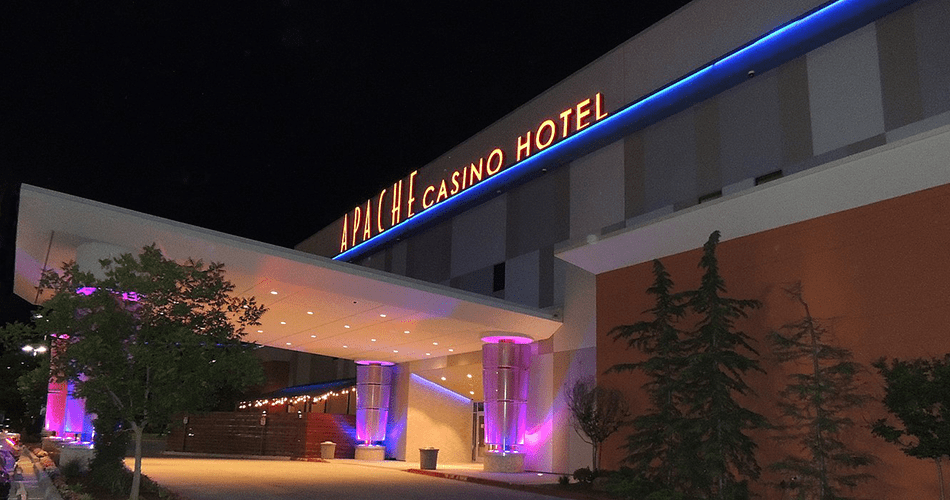
Oklahoma’s Kiowa and Comanche nations have filed legal proceedings against both the U.S. Interior Department and Fort Sill Apache leaders over the tribe’s plans to open a second casino.
According to local news reports, a federal judge will hear the tribes’ arguments before deciding whether or not to place a temporary injunction on the Warm Springs Casino which would prevent it from opening to the public throughout the duration of the lawsuit.
This is the latest episode in an extremely long dispute over Fort Sill Apache tribe’s gaming rights in southwest Oklahoma. This is because the land where the casino is located happens to be land that was promised to the Kiowa, Comanche and Apache tribes in an 1867 treaty.
The Kiowa and Comanche nations contend that although the Fort Sill Apache tribe’s descendants were forced to the area as prisoners of war, the tribe has no sovereignty over the land. However, federal regulators have already given verbal assurances that the casino will be approved with the tribe planning to open it in the coming days.
Two Kiowa casinos are within 20 miles of the new casino while there are a further two Comanche casinos just 30 miles distant. The tribes feel that a fifth casino will have a negative impact on their economic viability.
Tribal executive director Lindy Waters wrote in court filings:
“If gaming revenue were reduced, the revenue to fund the tribal government would be reduced, and the Kiowa Tribe would have to lay off employees and reduce the services provided to tribal members.”
The Fort Sill Apache tribe gained recognition in 1976 after its descendants had spent two decades in prison camps in the area. When freed, those descendants were given land that was promised to the Kiowa and Comanche.
The Fort Sill Apache tribe has had numerous attempts to launch gaming operations blocked with the tribe in court on multiple occasions. Under the federal Indian Gaming Regulatory Act passed in 1988, tribal casinos must be located on tribal lands where the tribe has jurisdiction. However, the lawsuit contends that the tribe has no such jurisdiction.
Image credit: jphill19 / CC BY-SA 4.0

Reporter & gambling industry analyst covering the land-based and online casino industry in the United States. Danny loves playing cards and Is a regular at L.A high-stakes poker games.